Your young children have so many firsts to enjoy:
- Their first words
- Their first steps
- Their first day at school
But who takes pictures for the wall, for the refrigerator, for the grandparents, that proudly show “their first dentist visit?”
Nobody, that’s who.
It’s because a child’s first dental visit at age 1 is as nerve-wracking for the parents as it is new for the kid. Kansas Family Dental eases the worry, specializing in painless kids’ dentistry and oral care. We’re here to make kids and parents comfortable and happy about their dental care.
Read our guide for what to look for when seeking pediatric dentistry near you, so you can be confident the experience works for you and your child.
Finding the Right Dentist for Your Kids
- Pediatric dentistry vs. regular dentistry
- What age group should the dentist treat
- What to look for in routine pediatric dentistry
- Choosing care beyond the baby years
How is pediatric dentistry different from regular dentistry?
Understanding the difference between “regular” dentistry and pediatric dentistry is like understanding the difference between a pediatrician and a general practitioner. The specialization is key.
Both are experts, but a dentist who practices pediatric dentistry has further extensive training understanding the unique ways that bodies grow, particularly the jaw, mouth, and teeth. They treat patients from infancy through their late teens, caring for developing teeth and jaws.
We often continue to see clients with disabilities into adulthood due to the trust earned in the relationship.

What ages best suit pediatric dentistry?
The American Academy of Pediatric Dentistry (AAPD) and the American Dental Association recommend bringing your child in for pediatric dentistry near you by their first birthday, or within 6 months of the appearance of their first tooth.
Benefits of Early Dental Care
These initial visits work more as preventative checkups, so that the kids’ dentist can:
- Start a positive relationship where the child feels safe
- Set up expectations that reduce dental anxiety later in life
- Catch any early decay to avoid more complex treatment later
- Begin the path toward good dental hygiene habits
This early dental care can also save parents money in the long run. According to a study published in the journal Pediatrics, children who have their first dental visit by age one have dental costs that are 40% lower over their first five years than those who wait.
What to Look for in Routine Pediatric Preventative Care
Qualified and locally convenient pediatric dentistry should provide youth-friendly preventative dental care that includes:
- Cleanings
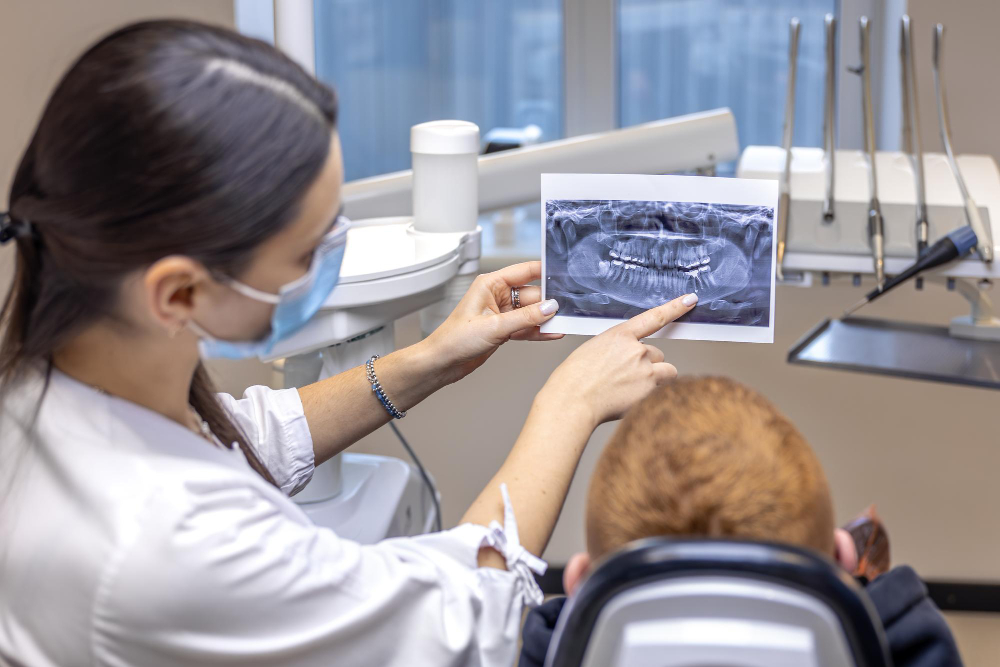
- X-rays
- Fluoride treatments
- Encouraging, positive experiences
Beyond the specific care measures, the relationship created between the dental team and the child should build rapport that eases anxiety about visits.
What are common pediatric dental issues?
When choosing a kids’ dentist, they should be able to competently and compassionately handle child-specific issues.
Early Childhood Caries
Also known as baby bottle tooth decay, caries happens when sugary liquids stay on a baby’s teeth too long.
Enamel Hypoplasia
“Chalky teeth” happens when enamel doesn’t form properly. This leaves teeth soft and prone to cavities.
Gingivitis
This appears as red, swollen, or bleeding gums, usually caused by inconsistent brushing habits.
Dental Care Beyond the “Baby” Years
As kids grow into the teen years, pediatric dentistry near you should address more complex care. The care team should still provide services that make youngsters and teens feel comfortable and willing to participate.
Orthodontic Screening
The changing size of the jaw, along with adult teeth replacing baby teeth, changes the bite in ways that affect teeth, bone, joints, and muscles. These screenings, especially over time, show the changes occurring and can help predict likely future concerns.
Clear Aligners
To help a child adjust to wearing orthodontic correction, clear aligners should be offered as an option. This is especially important for children who may have self-esteem concerns.
Wisdom Teeth Extraction
Wisdom teeth usually arrive around the age of 17 to 25. Pediatric dentistry provides care for a teenager that can monitor the development of this “third molar.”
Monitoring and extractions can prevent issues before they arise, such as:
- Impaction
- Crowded teeth
- Pericoronitis
- Bone damage
Restorative Work
Because kids up to the age of 12 or 13 have temporary teeth (baby teeth), a dentist doing pediatric dentistry near you must have the training to address the health of these teeth and the expected growth of new teeth.
For kids with adult teeth, the dentist should know the proper techniques and materials to provide restorative fillings and crowns that can last into adulthood.

Help for Mom and Dad, Too
The dentist should help parents fully and completely understand what to expect before, during, and after the visit. Mom and Dad should also receive tips and guidelines on how to talk to their kids about the upcoming treatments.
Find a Reason to Smile at Kansas Family Dental
Our dental office environment and care team make children feel welcome the minute they walk in. The sincere warmth and overall fun-ness of each visit creates positive reinforcement for future dental care checkups—along with a sense of relief for the parents.
Call Kansas Family Dental with your questions, or make an appointment. Either way, we look forward to providing your whole “crew” with compassionate dental care.